AQL Standard Table & Inspection Guide
The Acceptable Quality Limit (AQL) is the global standard for statistical product sampling. Learn how AQL works, view the ANSI/ASQ Z1.4 tables, and understand how we apply defect classification to your inspections.
The Acceptable Quality Limit (AQL) is the maximum number of defective units considered acceptable in a production lot. It is a statistical tool used in quality control to determine how many items need to be inspected and how many defects are allowed before the entire shipment is rejected.
PRIAAS conducts inspections based on ANSI/ASQ Z1.4-2008 (and ISO 2859-1), which is the most widely recognized standard for statistical sampling in the consumer goods industry.
Example: If you set an AQL of 2.5 for Major defects, it means you are willing to accept that up to 2.5% of the total order may have major defects, provided the random sample inspected does not exceed the allowable defect count for that percentage.
How We Classify Defects
To apply AQL properly, defects must be categorized. We classify all findings into three strict categories:
Critical Defects
(Typically 0 AQL)
These are safety hazards, regulatory violations, or issues that would cause the product to be banned or recalled (e.g., child labor, banned chemicals, sharp points on toys, locked fire exits). Any critical defect results in an automatic failure.
Major Defects
(Standard AQL 2.5)
Issues that affect the function, performance, or saleability of the product. (e.g., broken zippers, holes in the fabric, incorrect sizing, missing components). Consumers would return the product if they saw this defect.
Minor Defects
(Standard AQL 4.0)
Cosmetic issues that do not affect the function or safety of the product. (e.g., loose threads, minor color deviation, small spots, slight label misalignment)
ANSI ASQ Z1.4 – 2008
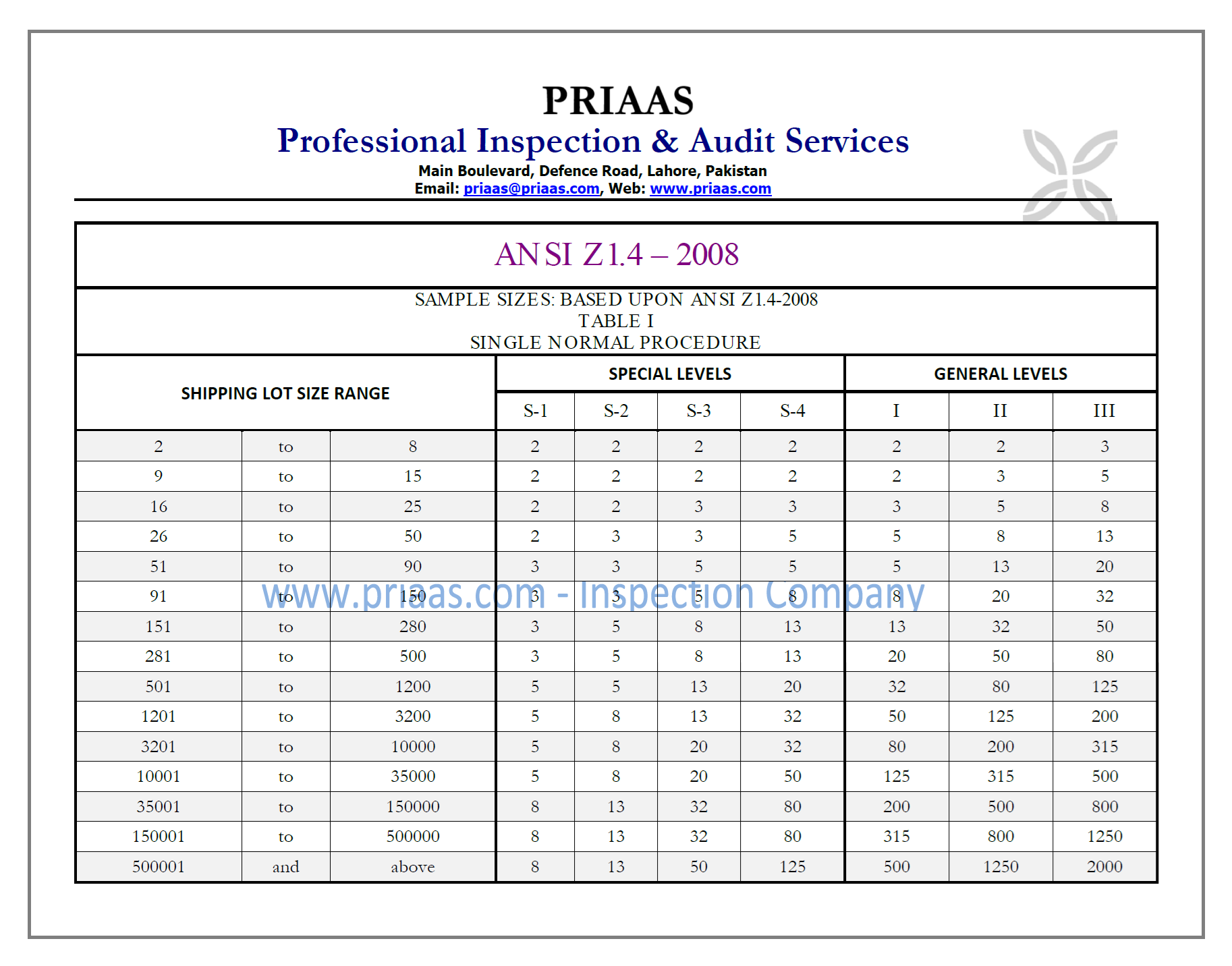
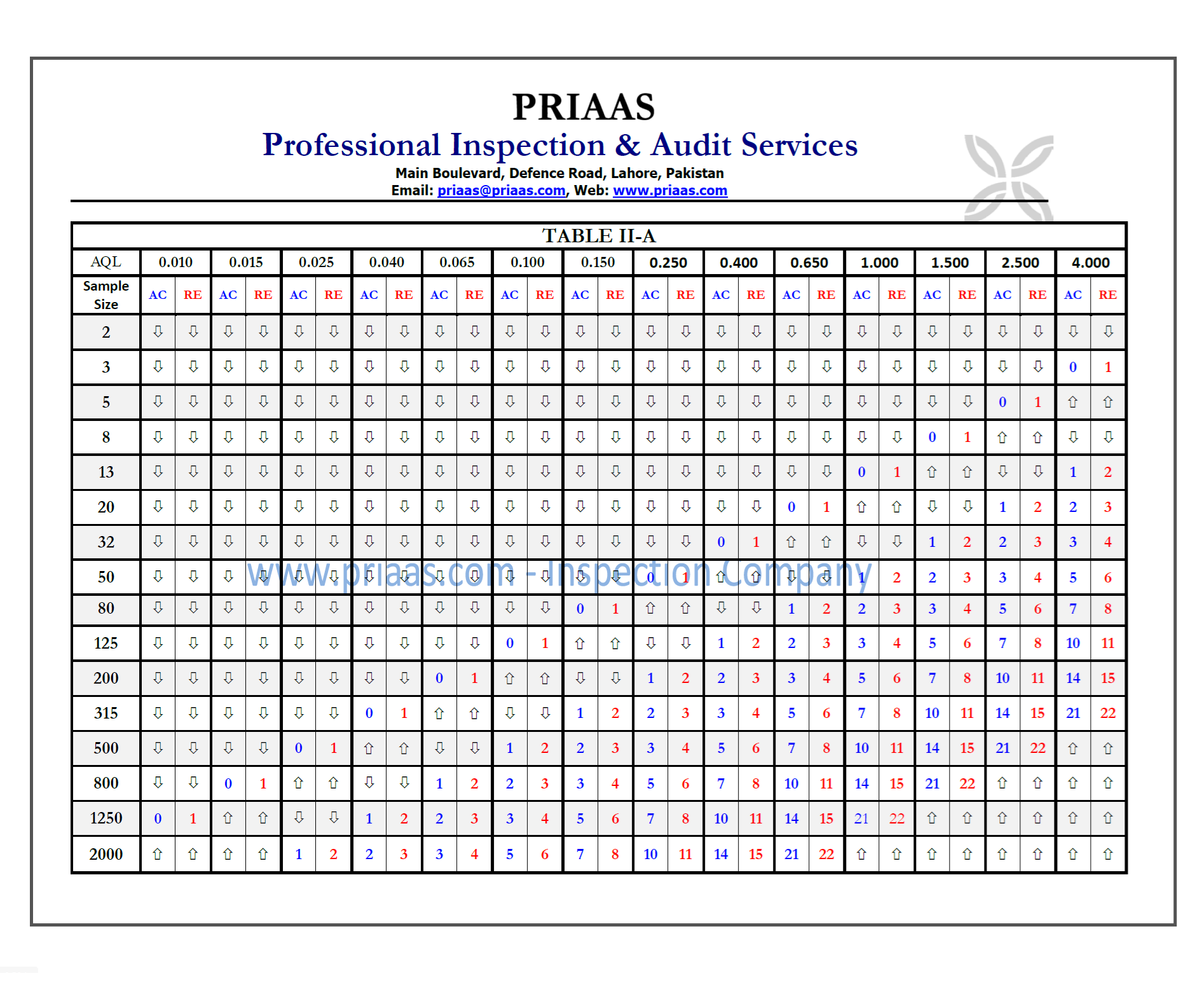
The table below represents the most common standard used for consumer goods: General Inspection Level II. Depending on your order quantity, it dictates the sample size the inspector must pull, and the maximum number of defects allowed based on your chosen AQL limits.
From the Table to the Factory Floor
Our inspectors do not just count defects; they apply the standard rigorously. During a Pre-Shipment Inspection, our inspectors:
Inquire Packing List from the Factory. Confrm total quantity or lot size or shipment size
Cross-reference the lot size with the AQL table to determine the number of units to inspect.
Use Tabl-II to determine Accepted & Rejected limits of Critical, Major & Minor defects
Conduct Product Inspection of selected samples. Classify & Count Critical, Major & Minor Defects.
Compare the findings against the Accept/Reject criteria to issue a final Pass or Fail recommendation.
AQL FAQs
Lorem ipsum dolor sit amet, consectetur adipiscing elit, sed do eiusmod tempor incididunt ut labore et dolore magna aliqua. Ut enim ad minim veniam, quis nostrud exercitation.Ut enim ad minim veniam, quis nostrud exercitation.
Is AQL 2.5 better than AQL 4.0?
Yes. The lower the number, the stricter the standard. An AQL of 2.5 means a maximum of 2.5% of the order can have major defects. An AQL of 4.0 allows up to 4.0% major defects. AQL 2.5 is the most common standard for general consumer goods.
Why do you use a sample size instead of inspecting 100% of the goods?
Inspecting 100% of goods is extremely time-consuming, expensive, and often impossible to do at the factory level without damaging the packaging. Statistical sampling (AQL) is scientifically proven to give an accurate picture of the entire lot’s quality without checking every single item.
What does it mean if an inspection fails the AQL limits?
If the number of defects found in the sample exceeds the “Reject” number on the table, the inspection fails. This means the overall lot has a high probability of containing an unacceptable level of defects. The factory must then sort, rework, or replace the defective goods and request a re-inspection.
What is General Inspection Level II?
The ANSI/ASQ standard has different levels of inspection strictness (Levels I, II, and III). Level II is the standard, default level used for 95% of all consumer goods inspections globally, as it provides a balance between statistical accuracy and inspection time.